
I was browsing for a new game yesterday nang makita ko yung Metal Gear Solid 4 na trailer. Then naisip ko, hindi ko pa pala nalalaro yun since wala akong PS3... (~_~) Then naisip ko, favorite ko pala talaga tong MSG Series since dami ko na nalaro nito.. So I've tried to recall all MSG games na nalaro ko na, nakakatawa kasi parang alam ko na pala buong story niya.. Kung pano, nagsimula si Big Boss, why sya naging evil, kung sino si Solid Snake, Liquid Snake at Solidus at kung san sila nagsimula.. I also experienced every improvement in game physics, graphics, story line and concepts as the game evolves as well as their platforms / console. Simula tayo sa umpisa:

METAL GEAR
Hideo Kojima's Metal Gear series first appeared in 1987 on the little-known MSX system. The game proved to be a success in Europe and in Japan but, at the time, it had little to no presence in the US
Metal Gear was an odd game in a time when games were dominated by RPGs and trigger-happy side-scrollers. I remember distinctly, as a young boy raised on games like Contra and Super Mario Bros, getting the game after reading a story in Nintendo Power. In the magazine, it seemed awesome: Gadgets of espionage, plus guns galore, wrapped up in a sweet-looking (for its time) graphics engine. Not to mention the added bonus of a deep storyline. After throwing the gray cartridge into the NES, I eagerly waited for the carnage to begin, calloused young hands grabbing the un-ergonomic NES controller with a frenzied stare at the television screen.
I landed behind enemy lines, but something was wrong. I had none of the guns the magazine said I would have. "Fine," I thought. I would find them - they were sure to appear magically once I shot some object right? I was wrong and, unfortunately, after trying to punch my way through dogs and guards, I died numerous times before giving up in frustration. It was months before I returned with the aide of an early game guide - and after finally "getting" what Metal Gear was attempting to do, I was hooked.
What I did not know during my original attempt, or failed to grasp at the time, was that Metal Gear was an ugly duckling released in the infancy of the gaming industry. Genre conventions we've come to know, love and, in some cases, even hate, were only starting to be defined. Amongst the games that provided "lives" that mysteriously appear in crates to alleviate the inevitable frustration of dying (making your character somewhat immortal), there was Metal Gear. If you were shot, you died. You had to sneak past sleeping guards, and slowly acquire weapons as you worked towards completing your mission objectives. There were early indications here, even in its original 8-bit form, of what would become a trademark of the series, much to the consternation of impatient gamers - the long, complex, sometimes convoluted and campy storyline.
As an 8-bit game, Metal Gear had very few "cut scenes" as we know them today. Most of the story was told through the codec messages, another trademark of the series that also manages to frustrate impatient gamers. Brief "in-engine" animations highlighting specific events - mostly simple pixilated, characters moving from point A to B on the current map - also added to the story.
Metal Gear managed to introduce the genre that has now become the "new hotness": stealth. You have limited ammo, enemies that can kill you easily, and only your wits to keep you alive.
It is important to note that the release of Metal Gear in the States wasn't without its problems. The translation was atrocious, though not as bad as "All your base are belong to us." Maps were changed, the Metal Gear was removed, and some bosses and enemies were made a little too easy.
Of course, Metal Gear also introduced gamers to the most underappreciated disguise ever depicted in gaming - the legendary cardboard box.
-UGO (http://www.ugo.com/)

1990 - Metal Gear 2: Solid Snake (MSX) : The lost sequel
Following Snake's debut on the MSX, it wasn't long before fans wanted more Solid Snake, and Mr. Kojima delivered with the unforgettable (among MG fans) Metal Gear 2: Solid Snake. The game only appeared on MSX systems in Japan
Metal Gear 2: Solid Snake reinforced the stealth game play conventions of the first game. One of the most noteworthy improvements was the adaptation of an alert system and the increase in the enemy's sight cone. They could now see you in the MG trademark 45-degree viewing angle (the cone of sight from a guard's standing position projected forward). The game included more equipment and weaponry, an improved graphics engine, and the arrival of the life-saving radar to detect enemy locations and movement - another series staple.
Now, it is important to note that unless you played a ROM of this game, you have not played the true sequel to Metal Gear. After the success of the NES release, Konami's ULTRA games division began to release a horde of horrible clones. Think of them as side missions, though even by doing that, what little logic there is to the Metal Gear timeline is thrown into disarray. The most memorable of these clone titles was *cringe* Snake's Revenge: Metal Gear 2. The events portrayed in that title have nothing to do with the overall storyline linking the classic Metal Gear games to the modern Metal Gear Solid trilogy. The true sequel to Metal Gear contained the infamous barehanded minefield fight between Solid Snake and Grey Fox, a side-story that is referenced and concluded in Metal Gear Solid.
And yes, Snake, once again, did return with his cardboard box.
-UGO (http://www.ugo.com/)

1998 - Metal Gear Solid (PS1, PC) : Solid Snake returns
Finally, we come to the game that re-invigorated Hideo Kojima's Metal Gear series. When Metal Gear Solid debuted at the 1997 E3, jaws literally hit the ground. The new game took all the trademark elements of the top-down, two-dimensional 8-bit title and expanded on them tenfold. The most notable was the 3D graphics engine, a first for the series thanks to the Sony console. This allowed players to actually become part of Snake's world, and see and interact with it through his eyes.
While the game maintained the top-down view, the 3D engine allowed Hideo to draw the camera out a little more, making it an effective, claustrophobic third-person adventure. Another first for the series was the inclusion (again made possible thanks to the 3D engine) of first-person firing modes with specific weapons. While it wasn't a fully supported view (that would come in its sequels and the Gamecube remake), it got the job done nonetheless. Metal Gear Solid introduced Snake to a larger arsenal of equipment, weapons, and moves to take out his opponents in various grisly manners.
The game also introduced us to the voices of the Metal Gear Solid series, being the first fully voice-acted title. The cast included series favorites David Hayter as the one and only Solid Snake, Cam Clarke as the unforgettable lunatic Liquid Snake, Christopher Randolph as "Otacon," Paul Eiding as Roy Campbell, and Patric Zimmerman breathing life into one of the coolest villains in gaming, Revolver Ocelot.
Metal Gear Solid is considered by many to have the tightest, most coherent storyline of the entire series. It also sets the stage for the trilogy, introducing the 3-pronged issue that Kojima identifies as the unifying elements of the trilogy: MGS or Memes, Genes, and Scenes (or eras). We explore these elements further later.
The cardboard box returned, but this time, guards were smart enough to search suspicious boxes.
-UGO (http://www.ugo.com/)

2001 - Metal Gear Solid 2: Sons of Liberty (PS2):
The traumatic sequel
With the announcement and demonstration of the impressive opening to Sons of Liberty at the 2000 E3, jaws once again hit the ground. Using the obvious improvements in technology offered by the PS2, Sons of Liberty wowed gamers and press alike. It was unbelievable at the time that the videos gamers were seeing weren't pre-made cinematics, but all done in-game using the impressive engine built to display the game. Once again, Snake was to return, or so we thought, with a larger arsenal of abilities, including being able to see the world for the first time in a fully supported first-person view, hold up and shake down guards for items, and use the environment to your advantage.
The environment wasn't fully interactive, but it allowed for some devilishly fun gameplay in the hands of a seasoned gamer. You could shoot fire extinguisher to hide your escape in a cloud of gas, shoot out lights and literally torture your enemies with body location damage they reacted to. While Metal Gear Solid was a fun, straightforward adventure, Sons of Liberty became a soapbox of tactical espionage. There are those who claim the series took a turning point here in terms of being more cinematics than gameplay, but many MGS fans disagree, pointing to the freedom to do as you will, as well as tons of hidden easter eggs and side paths to explore.
Sons of Liberty
This time, Snake's cardboard box could actually get soggy and deteriorate in the rain, a development as traumatic to some as the storyline.
-UGO (http://www.ugo.com/)

2004 - Metal Gear Solid 3: Snake Eater (PS2) :
The pinnacle of the series
The pinnacle of the series
Haters take notice: Snake Eater (well, the Subsistence version at least) was the Metal Gear Solid franchise in its prime in the last gen console era, marking a stunning conclusion to the series (for last gen consoles) and the beginning of the end for the PS2. Snake Eater represents one of the most immersive titles in the series. Controls were refined to perfection, the alert system and enemy A.I. the best it's been - which at times can be terrifying. On top of this were layered some of the most impressive graphics in the series thus far. The storyline, while somewhat fudging up important key dates, does an exceptional job of tying the three games together with the original 8-bit series. Gamers, needless to say, were terrified that Kojima would have another prank in the works, a stunner along the lines of the presence of Raiden in Sons of Liberty. While some younger gamers truly didn't grasp the importance of what was in store, older gamers that played the classic 8-bit games began to salivate fiendishly.
This time around, Snake did return, but not the Snake we know from the first two Metal Gear Solid games. You played the legendary Big Boss, a Keyser Soze-like figure who represented the villain in the first two Metal Gear games and whose presence was felt in the Solid series. There were so many questions left unanswered after Sons of Liberty, and many gamers were scratching their heads how this prequel could answer them. Rumors included time machines, VR missions and, in some fanbase circles, even the presence of ALIENS!! Thankfully, none of the rumors proved true, and this Snake Eater provided answers and explanations (in a roundabout way) about the curse of the Snake genetic line. This was also the first Metal Gear game (not including the US
Other improvements to the series included the removal of the permanent radar in favor of true spy gadgets, such as a sonar and limited range motion detector, to get a bearing on your enemies. Also a first was the inclusion of the feeding, healing, and camouflage systems. Snake was required to hunt for food to keep his stamina up, forage for medicinal supplies to patch up injuries like broken bones, food poisoning, or gunshot wounds, and wear the appropriate camouflage to remain hidden in his surroundings. Snake Eater also featured some of the best voice acting of the series and revealed the origins of many of the important characters and technologies featured in the Metal Gear series.
Metal Gear Solid 3: Subsistence added a number of improvements including improved camera controls (for the non-purists tired of the top-down isometric perspective), introduced the PS2 version of Metal Gear Online, and included a bonus disc that not only contained trailers for MGS3, but also ports of the original Metal Gear and Metal Gear 2 with corrections made to improve the storyline and dialogue.
Snake's cardboard box returned, but was easily forgotten by gamers thanks to his badass Croc cap.
-UGO (http://www.ugo.com/)

2004 - Metal Gear Solid : Portable Ops (PSP) :
Overdue and appreciated!
When it was announced that a Metal Gear title would find its way onto the PSP, speculation ran rampant as to what it would be. A remake of the NES original using a PSP-compatable Snake Eater engine? A prequel to 4? What arrived was AC!D, a descent distraction for a spinoff, but not quite what long running fans wanted.
That all changed with the arrival of Portable Ops, a true to its console brethren counterpart that continued Big Boss' adventures following the events of Snake Eater, including the introduction of fan-favorite Roy Campbell (aka Colonel Campbell) as a young soldier and the origins of the Gray Fox/Big Boss relationship as well as "Outer Heaven". In Portable Ops, Big Boss and Roy Campbell form the infamous group FOX-HOUND, to track down Big Boss' former unit "FOX".
In addition to providing a portable Metal Gear experience, Portable Ops, at the time pushed the envelope of what to expect out of PSP title. A large component of the game was recruiting soldiers to join Big Boss' ranks. To help accomplish this, players could recruit soldiers from within the single player game, by obtaining recruits from rival players in multiplayer, or by scanning wi-fi hotspots or using the PSP GPS unit to get location specific soldiers.
Portable Ops was followed by Portable Ops +, effectively a stand-alone add-on that focused on refining the multiplayer experience. While the lack of a single player narrative hurt the title's release, it remains a nice fix until the release of Metal Gear Online on the PS3.
The cardboard box did return in both Portable Ops and Portable Ops+. The great croc-cap was nowhere to be found.
-UGO (http://www.ugo.com/)

METAL GEAR 4: Guns of the Patriot
Metal Gear Solid 4 is set five years after the Big Shell incident, in 2014. The world economy relies on continuous war, fought by PMCs, which outnumber government military forces. PMC soldiers are outfitted with nanomachines to enhance their abilities and control the battlefield. The control network created through these nanomachines is called Sons Of the Patriots (SOP), and Liquid Ocelot is preparing to hijack the system. Snake accepts a request from Roy Campbell to terminate Liquid, with Otacon andSunny providing mission support from the Nomad aircraft.
In MGS4, the player assumes the role of Old Snake, utilizing stealth, CQC and traditional combat techniques. The overhead camera of earlier Metal Gear games has been replaced by a third person camera, with First Person View and Over The Shoulder cameras optional.
A further addition to gameplay mechanics is the Psyche Meter. Psyche is decreased by non-lethal attacks, and is influenced by battlefield psychology. Stressors (including temperature extremes, foul smells and being hunted by the enemy) increase Snake's Stress gauge, eventually depleting his Psyche. Adverse effects include difficulty in aiming, more frequent back pain and the possibility of Snake passing out upon receiving damage. Among the available methods of restoring Psyche are eating, drinking, smoking and reading a magazine.
Snake has a few gadgets to aid him in battle. The OctoCamo suit mimics the appearance and texture of any surface, decreasing the probability of Snake being noticed. The Solid Eye device highlights items and enemies, and can operate in Night Vision and Binocular mode. It also offers a Baseline Map, which indicates the location of nearby units. The latter function is also performed by the Threat Ring, a visualization of Snake's senses that deforms based on nearby unit proximity.
Metal Gear Mk.II, later substituted by Mk.III, offers CODEC functionality and a means to the in-game menu for a large part of Snake's mission. It can be remote controlled to stun enemies, provide reconnaissance and interact with the environment. Its design is based on the namesake robot from Snatcher, a game designed by Hideo Kojima.
Whenever the Drebin menu is available, weapons, attachments and ammunition can be purchased via Drebin Points, awarded for on-site procurement of weapons already in the inventory and by initiating specific scripted events. The conversion rate between weapons and DPs depends on current battlefield conditions, with more-intense fighting yielding higher prices.
The Virtual Range
-Wikipedia (http://en.wikipedia.org)
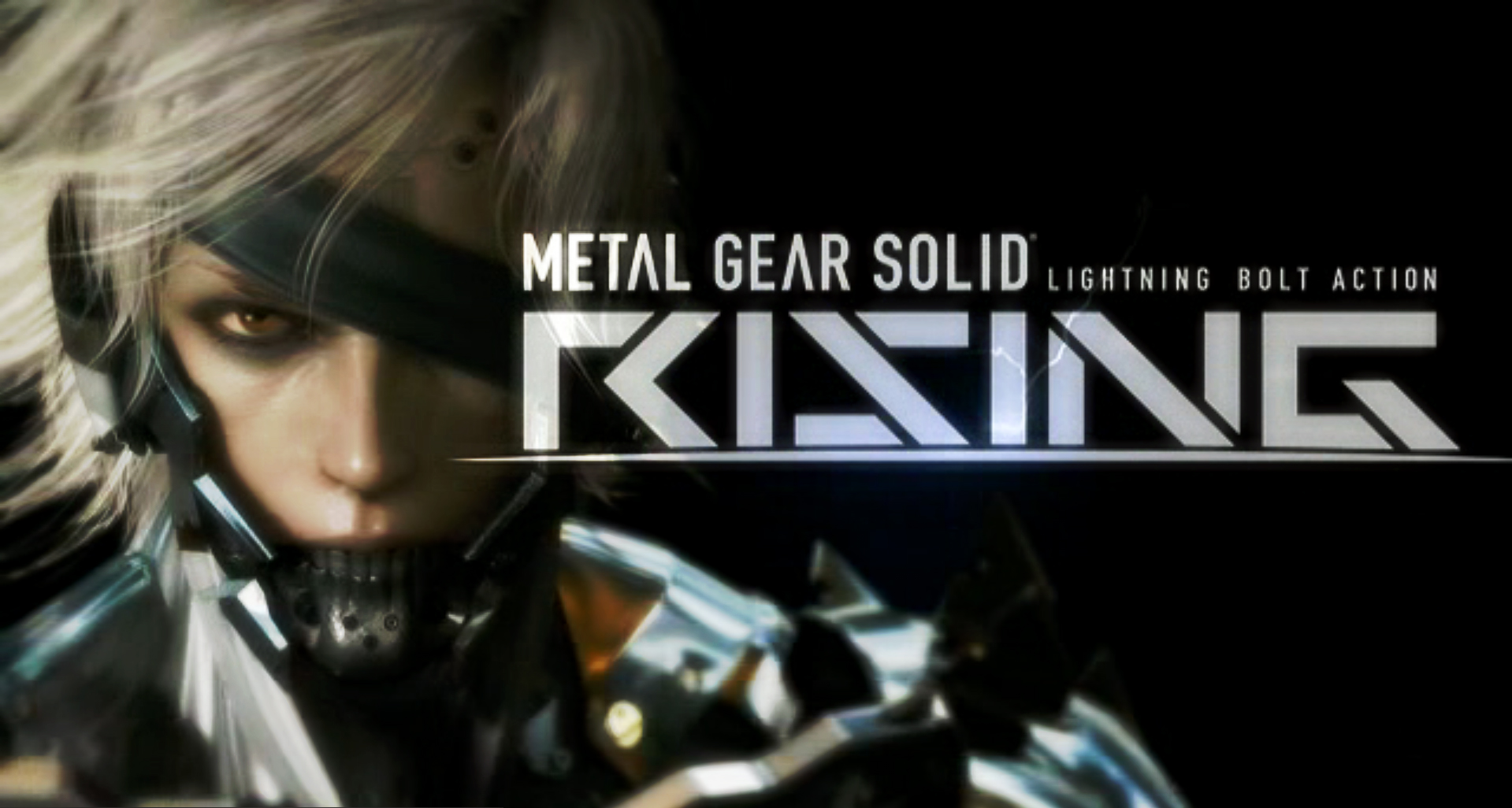
Metal Gear Solid: Rising
Metal Gear Solid: Rising is an upcoming stealth action video game in the Metal Gear series byKojima Productions. The game was announced at the Microsoft E3 2009 press conference, and is in development for PlayStation 3, Microsoft Windows, and Xbox 360. The series' former tagline, "Tactical Espionage Action", has been replaced by "Lightning Bolt Action", to fit the new protagonist, Raiden; the word Raiden (雷電?) is Japanese for 'thunder and lightning'. InJapanese mythology, Raiden is another name of Raijin (雷神?), the god of thunder.
The main character of the game is Raiden, the protagonist and player character of Metal Gear Solid 2: Sons of Liberty, who appears in the cyborg ninja state he was in during the events ofMetal Gear Solid 4: Guns of the Patriots. The second teaser depicted Raiden in his Metal Gear Solid 4 armor with sword drawn, crouching on the back of what appears to be Crying Wolf. Although Kojima referred to the game as the "next generation MGS5", no details about the storyline or the chronological setting have been revealed yet.
The game was first hinted during Hideo Kojima's keynote presentation at the 2009Game Developers Conference in San Francisco
Prior to the announcement of the game, Kojima Productions featured a countdown timer on their website, having weather going from cloudy to extremely heavy rain with thunder and lightning, until the day that Rising was announced, leading to sunny weather. At the conclusion of the countdown, the site was replaced with image of a brick wall featuring a splash-screen graphic for Metal Gear Solid: Rising.
Here are some trailers of the game:
Another one:
GGness! Di na ako makapaghintay! Sobrang nai-excite ako pag nakikita ko ang game na to since this is the latest installment in the Metal Gear Series. Also these are the main reasons why I'm particularly excited to play this game:
- They will release a Windows version of this game and since wala akong Xbox360 at PS3, i will make sure na malalaro ko to sa PC. Wala syang kawala. GGness.
- Because Raiden will be the Lead Character and playable character in this game who is my most faved character in all of the games I've ever played. I even named my son after him.. (My son's name is Raiden Martin.. cool huh?!)
So I will be waiting for this game... *tik..tak..tik..tak..* Once I've played it, I will give you guys an awesome review.


